

Poker might seem like one game, but the rules can change quite a bit depending on which version you're playing. Some games involve shared cards, while others let you exchange cards or compete against the dealer. Knowing the different poker game variants makes it easier to follow the action and find a game that suits your interests. Here's a closer look at the major poker categories and what sets them apart.
Understanding Poker Hand Rankings
Before trying different poker variants, it's useful to understand how poker hands are ranked. In most traditional high-hand games, the goal is to create the strongest five-card combination possible.
Here are the standard poker hands, ranked from strongest to weakest:
royal flush: a 10, jack, queen, king, and ace of the same suit
straight flush: five consecutive cards of the same suit
four of a kind: four cards of the same rank, such as four kings, plus one additional card
full house: three cards of one rank and two of another
flush: five cards of the same suit, regardless of sequence
straight: five consecutive cards of different or mixed suits
three of a kind: three cards of the same rank plus two other cards
two pair: two sets of cards with matching ranks plus a fifth card
one pair: two cards of the same rank plus three side cards
high card: a hand without any matching pairs or other winning combinations, ranked by its highest card
These rankings apply to familiar games such as Texas Hold'em, Omaha Hi, and Five-Card Draw. However, some poker variants use different systems, so the strongest hand in one game might not be the best in another. Razz, for example, rewards low hands, while Badugi uses a four-card ranking system that favors different ranks and suits.
Community Card Poker Games
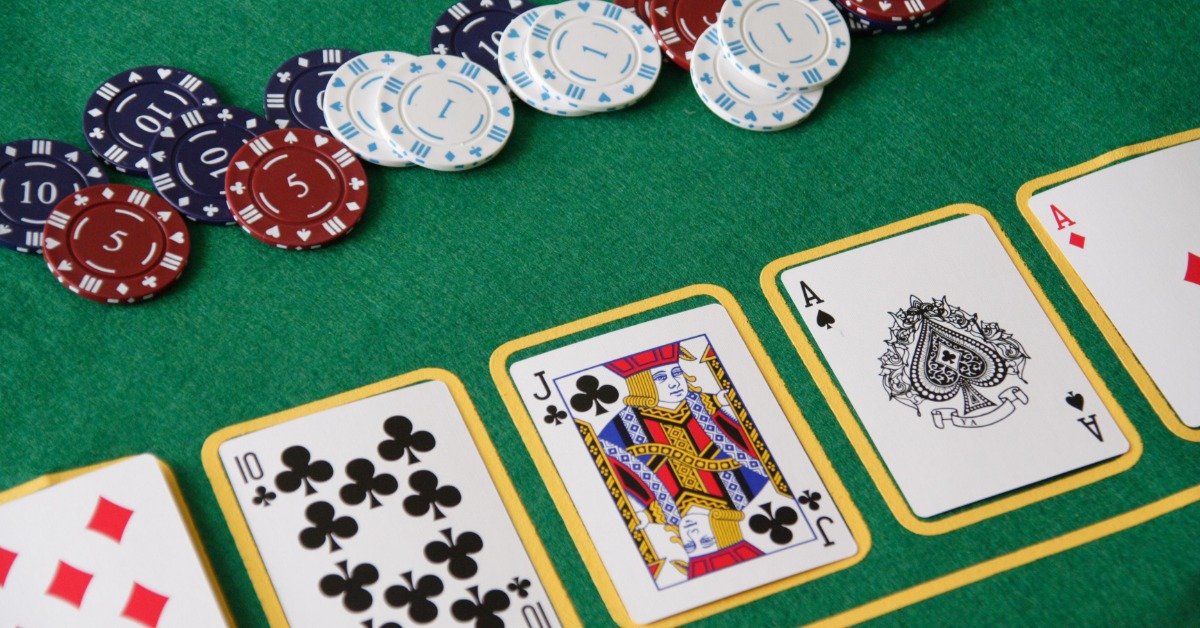
In community card poker, players use cards placed face-up in the center of the table to build their hands. Everyone has access to these shared cards, but each player also receives private cards that influence their decisions. The number of cards dealt and the rules for combining them depend on the particular variation.
Texas Hold'em
Texas Hold'em is one of the most recognizable poker variants, played in everything from major tournaments to casual gatherings. Each player receives two private cards, while five community cards are revealed in stages known as the flop, turn, and river. The goal is to make the strongest five-card hand using any combination of your private cards and the shared cards. Several betting rounds give players opportunities to fold, call, raise, or bluff as the hand develops.
Omaha Poker
Omaha resembles Texas Hold'em, but more private cards create additional ways to build a hand. Each player receives four private cards, and five community cards are dealt throughout the game. Unlike Hold'em, you must use exactly two of your private cards and three community cards to form your final hand. In Omaha Hi, the highest-ranking hand wins, while Omaha Hi-Lo allows qualifying low hands to share the pot with high hands.
Stud Poker Games
Stud poker works differently because players don't share community cards. Instead, everyone receives their own cards, with some dealt face-up for opponents to see and others kept hidden. Understanding how different poker variants use exposed cards helps you better understand the decisions involved in stud games.
Seven-Card Stud
Before Texas Hold'em became widespread, Seven-Card Stud was one of the most popular ways to play poker. Each participant receives seven cards over the course of a hand, with some visible to other players and others dealt face-down. You'll use the best five of those cards to form your final hand, making decisions during betting rounds as additional cards appear. Because you can see part of your opponents' hands, paying attention to exposed cards is an important part of the strategy.
Razz Poker
Razz changes poker's usual objective by rewarding the lowest-ranking hand instead of the highest. Players receive seven cards and try to create the best possible five-card low hand. Aces count as low cards, while straights and flushes don't work against you, making A-2-3-4-5 the strongest possible combination. This ranking system encourages a different way of evaluating cards and deciding whether to stay in a hand.
Draw Poker Games

Draw poker gives you a chance to improve your hand by exchanging cards. Players start with private cards and can discard unwanted ones during designated drawing rounds. Since the cards remain hidden, watching how many your opponents exchange can offer clues about the hands they're trying to build.
Five-Card Draw is a familiar example, with each participant receiving five cards and typically having one opportunity to replace some of them. Triple Draw games extend that process across three drawing rounds, giving players more chances to adjust their hands and betting decisions. Other variations, such as Badugi, introduce different ranking systems, where the goal is to create a four-card low hand with no repeated ranks or suits.
Casino-Style Poker Games
Casino-style poker games often replace player-to-player competition with a format where everyone plays against the dealer or tries to achieve a qualifying hand. In Three-Card Poker, participants use three-card hands to compete against the dealer, with optional side bets available under certain rules. Caribbean Stud follows a similar dealer-based structure but uses five-card hands and requires the dealer to qualify for certain payouts.
Let It Ride offers another variation, where players focus on building a qualifying five-card hand rather than beating an opponent. Participants receive three private cards and decide whether to withdraw portions of their initial bets as two additional cards are revealed. These games can also be part of casino-themed entertainment, where a casino game rental company provides tables and dealers for special events. At entertainment-only parties, guests can play using chips without wagering real money.
Mixed Poker Games
Once you're familiar with individual poker variants, mixed games introduce the challenge of switching between them. Instead of following one set of rules for an entire session, players rotate through different games after a set number of hands or rounds. This format tests your ability to adjust your strategy as the gameplay changes.
H.O.R.S.E. is a popular example that combines Hold'em, Omaha Hi-Lo, Razz, Seven-Card Stud, and Seven-Card Stud Hi-Lo. Eight-Game Mix expands the selection by adding games such as No-Limit Hold'em, Pot-Limit Omaha, and 2-7 Triple Draw. With different hand rankings and betting structures to remember, mixed poker is generally better suited to players who already understand several variations.
Every poker variant offers a different experience, whether you enjoy the familiar structure of Texas Hold'em or the unusual hand rankings of Razz. Five-Card Draw can be a good starting point for beginners, while Omaha and mixed formats offer additional challenges for experienced players. Before joining a game, learn how the cards are dealt, what makes a winning hand, and how the betting works. Once you've mastered the basics of one variation, you can branch out and find other styles that you enjoy.